Engineering the Architecture ofSilence Through Spatial Restraint
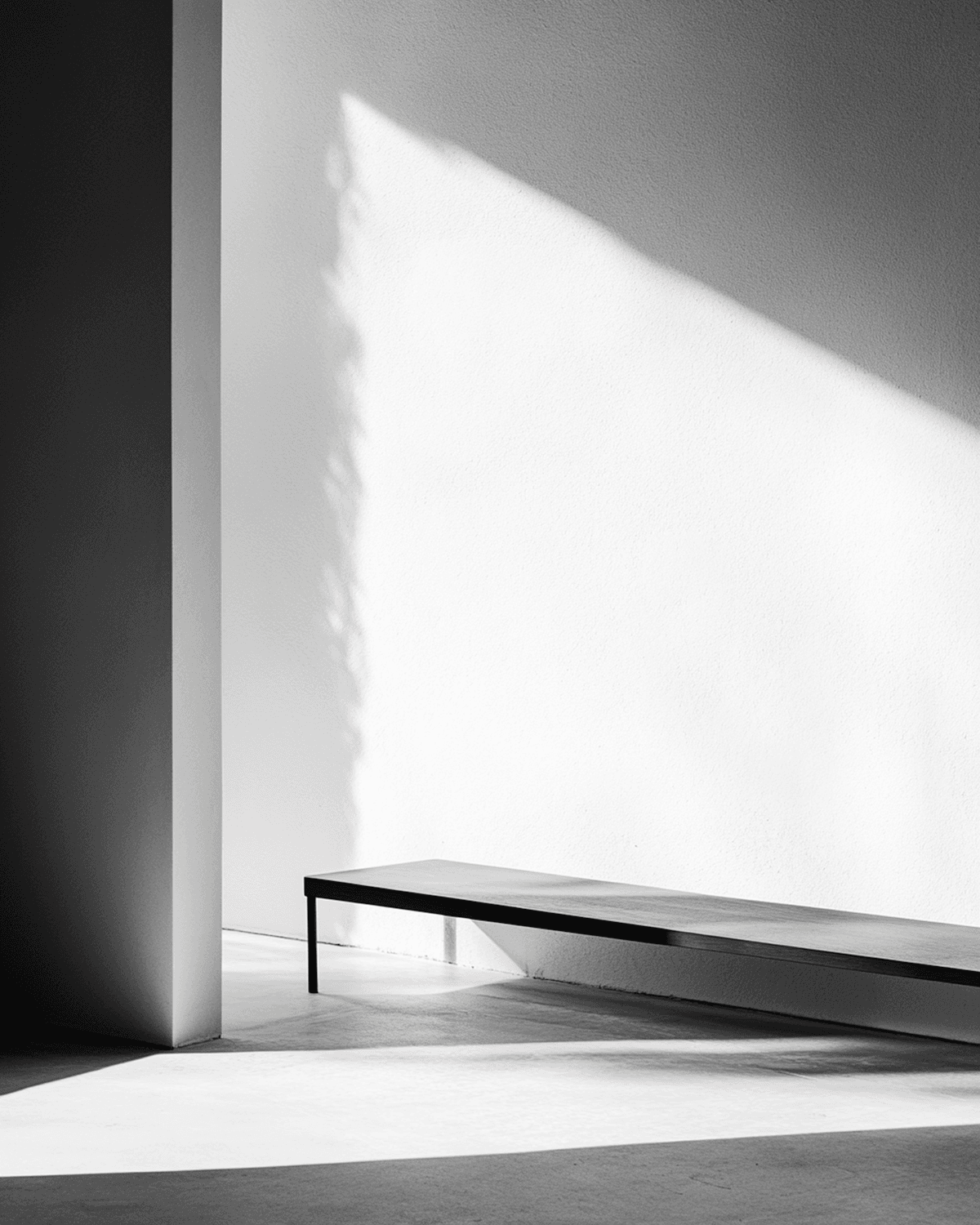
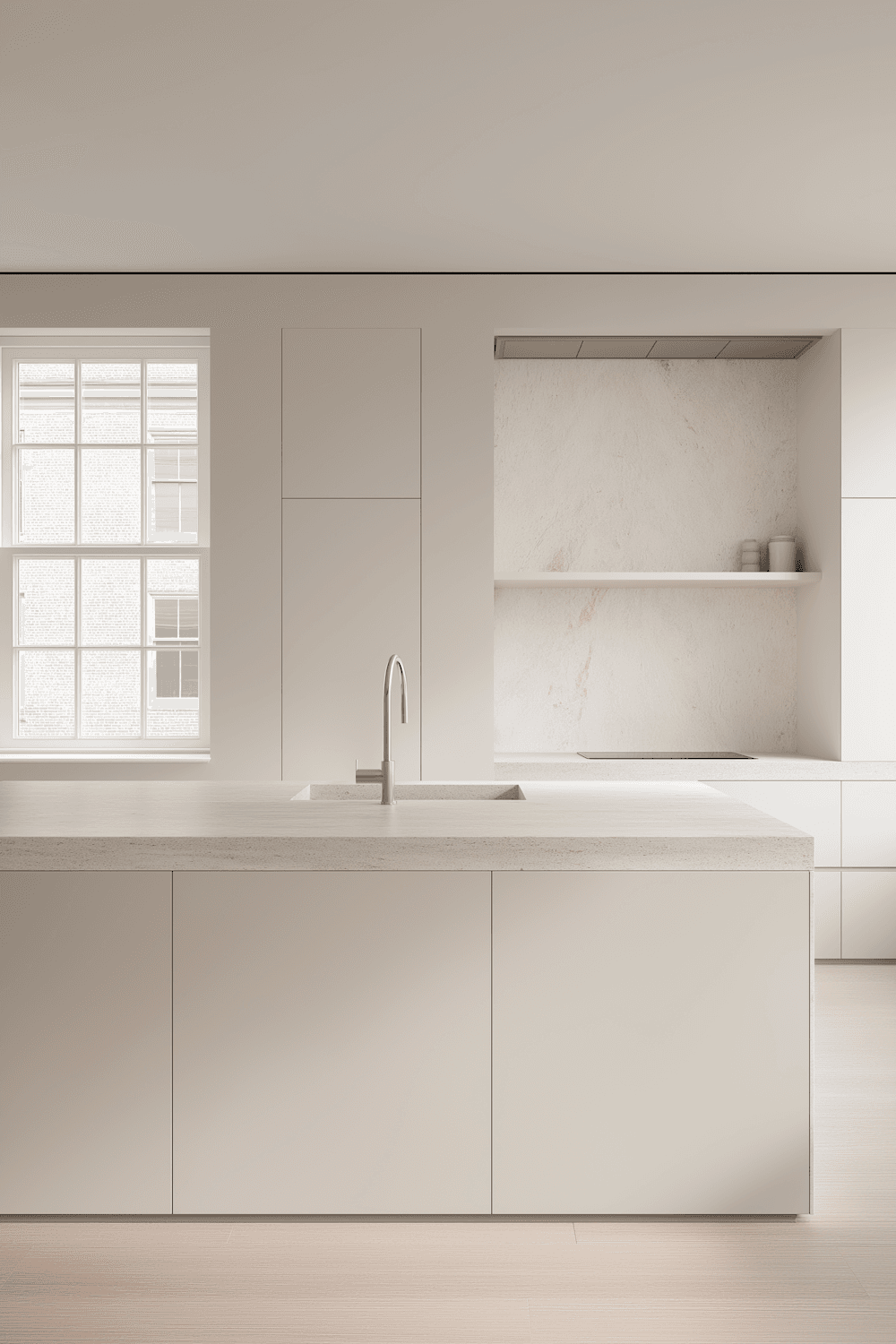
Modern environments are overwhelmed by visual and auditory noise. We view interior architecture not merely as the division of space, but as a strict exercise in restraint. By stripping away non-essential partitions, we attempt to engineer a permanent structural anchor that forces the mind to quiet itself.
Engineering Stillness
True luxury is the absence of the unnecessary. When we approach a new spatial intervention, our first directive is always reduction. What can be removed? What partitions can be dissolved to allow the architecture to step back? Stillness is not achieved by adding soft materials; it is achieved by correcting the structural proportions of the room itself.
The Weight of Empty Space
Negative space is our primary material. A room must have enough empty volume to let the mind breathe. When art or custom fabrication is finally introduced into the environment, it must justify its existence, acting as a deliberate focal point rather than mere decoration.
Auditory Fasting
The visual clutter of a space often translates directly to a buzzing psychological noise. By creating environments heavily reliant on monolithic forms and unified material palettes, we initiate an auditory fast for the inhabitant. The eye is no longer darting between disjointed elements, allowing the heart rate to physically lower.
The Geometry of Calm
We rely on strict, unyielding geometry to establish a baseline of calm. Arches, perfect right angles, and unbroken sightlines communicate a sense of permanent order. When the architecture is mathematically predictable, the human mind ceases to process its surroundings defensively and begins to rest.
Rejecting the Decorative
Decoration is a temporary bandage applied over poor architectural planning. If a wall requires a gallery of frames to feel complete, the wall was incorrectly proportioned. We design structural surfaces that command attention entirely on their own, removing the temptation to clutter the void.
Shadows as Partitions
Rather than erecting drywall to separate living zones, we use the strategic placement of light and heavy shadow to define boundaries. A deeply shadowed alcove naturally dictates a quieter, slower human interaction than a brilliantly illuminated atrium, dividing the space psychologically rather than physically.
The Psychological Anchor
An environment should ground its inhabitant. Through the use of heavy, earth-bound materials, like poured concrete floors and massive stone plinths, we create a subconscious feeling of being anchored. The architecture becomes a sanctuary against the rapid acceleration of the outside world.
A Return to the Monolith
Ultimately, the architecture of silence is a return to ancient, monolithic building principles. It is an acknowledgment that humanity does not need more objects; we need environments that are engineered to outlast us, standing entirely still in a world of constant motion.